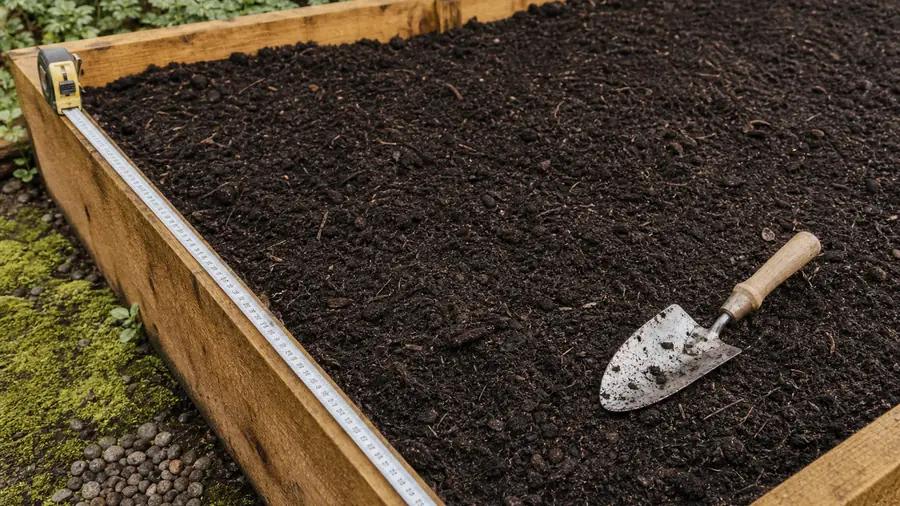
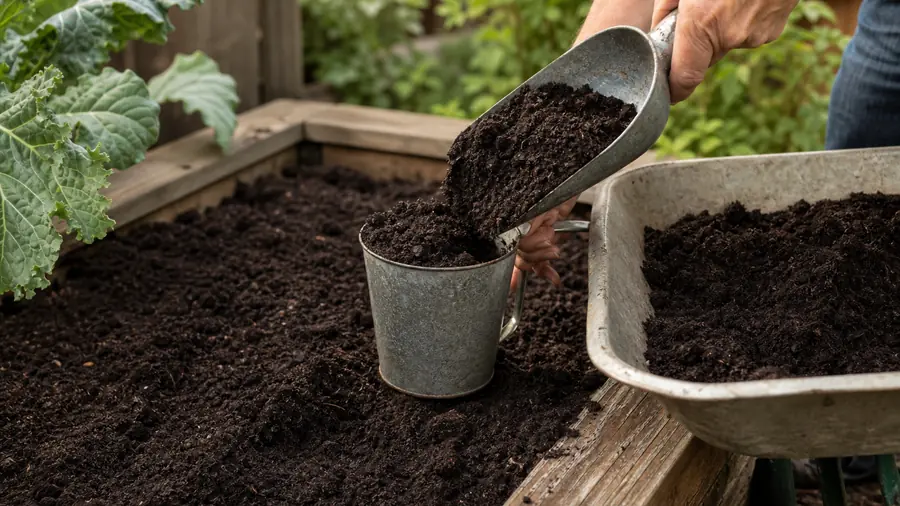
Mulch ordering guide
How much mulch do you need?
A 100-square-foot bed at three inches deep needs about 0.93 cubic yards, 25 cubic feet, or thirteen 2-cubic-foot bags. Your order changes with the measured area, target depth, existing layer, and package volume.
Content and source check completed July 28, 2026 Geometry, application, and buying checks
Quick formula
Cubic yards = square feet × depth in inches ÷ 324. Keep the unadjusted answer visible, add an allowance only when the job justifies it, and round upward only when converting the final volume to whole bags or supplier order increments.
Check every conversion and rounding ruleHow do you calculate mulch in cubic yards?
Multiply surface area in square feet by mulch depth in inches, then divide by 324. The shortcut converts inches to feet and cubic feet to cubic yards in one step.
One foot contains 12 inches and one cubic yard contains 27 cubic feet. Multiplying 12 by 27 gives 324. A 10-foot by 10-foot bed has 100 square feet. At three inches, 100 × 3 ÷ 324 equals 0.926 cubic yards before display rounding.
You can also calculate in two stages: divide the depth by 12, multiply that depth in feet by the bed area, then divide the cubic feet by 27. Iowa State University Extension explains this same area-and-depth method. Both routes reach the same result when the inputs stay in compatible units. The How Much Mulch Do I Need? Formula, Yards and Bag Guide works through the same formula with coverage and bag tables.
| Stage | Calculation | Result |
|---|---|---|
| Area | 10 ft × 10 ft | 100 sq ft |
| Volume | 100 × 3 in ÷ 324 | 0.93 yd³ |
| Cubic feet | 0.926 × 27 | 25 cu ft |
| Two-foot bags | 25 ÷ 2, rounded up | 13 bags |
How deep should a mulch layer be?
Many landscape beds use roughly two to four inches, but material texture, drainage, plant size, and mulch already on the ground can change the appropriate addition. Measure the existing settled layer before choosing a top-up depth.
The University of Minnesota Extension describes a two-to-four-inch mulch layer for weed suppression while preserving soil aeration. Penn State Extension gives a similar general range around landscape trees and advises a thinner one-to-two-inch layer for fine-textured or double-shredded material that restricts oxygen more readily.
Those ranges are guidance, not a hidden calculator preset. If a bed already carries two inches and your intended settled total is three inches, calculate a one-inch addition. Adding another full three-inch layer every year would overstate the order and could build an unhealthy depth.
Record why you selected the depth. A fresh installation, a shallow refresh, a coarse wood-chip path, and fine mulch over poorly drained soil are not interchangeable jobs. Local extension advice should outrank a generic internet chart when site conditions differ. Compare those source contexts in the mulch-depth-by-project guide.
How much area does one cubic yard cover?
One cubic yard covers 324 square feet at one inch, 162 square feet at two inches, 108 square feet at three inches, or 81 square feet at four inches. Coverage decreases in direct proportion as depth increases.
The University of Florida IFAS confirms the 324-square-foot coverage at one inch and 108 square feet at three inches. A coverage table is helpful for a quick reasonableness check, but exact measurements are better for several beds, curved borders, or projects using more than one depth.
| Installed depth | Coverage | Useful check |
|---|---|---|
| 1 inch | 324 sq ft | thin measured refresh |
| 2 inches | 162 sq ft | existing layer considered |
| 3 inches | 108 sq ft | common planning example |
| 4 inches | 81 sq ft | site guidance verified |
How do you measure rectangular, circular, and irregular beds?
Calculate the surface area of each shape, add areas receiving the same depth, and keep different depths in separate calculations. Sketching the bed reduces missed sections and accidental overlap.
A rectangle uses length × width. A circle uses π × radius², where radius is half the full diameter. A triangle uses base × perpendicular height ÷ 2. For an irregular border, divide the outline into manageable rectangles, circles, and triangles, then add those pieces.
Measure the space mulch will occupy rather than the outer edge of a frame. Subtract patios, stepping stones, ponds, exposed tree-root zones, and other surfaces that will not receive material. For a long curved bed, several short measurements usually produce a more defensible estimate than one generous bounding rectangle.
The irregular garden bed measurement guide shows split-shape and equal-offset methods with checked examples. Bring its final square-foot total back as a known area.
When every section gets the same layer, one total area is fine. When the front border receives two inches and a new shrub bed receives three, calculate each group separately. Averaging the depth can obscure where the material is meant to go even if the final volume looks tidy.
How many bags of mulch should you buy?
Convert the adjusted requirement to the volume unit printed on the bag, divide by that package volume, and round upward to a whole bag. Never assume every product uses the same package size.
One cubic yard equals 27 cubic feet. If a project needs 25 cubic feet and the chosen product contains two cubic feet per bag, the exact quotient is 12.5, so the shopping quantity is thirteen bags. A 1.5-cubic-foot bag would produce a different count for the same bed.
Package weight is not package volume. Moisture, wood species, particle size, and processing can change weight without changing the bed volume you need to fill. Enter cubic feet or liters from the volume panel. If a package lists only weight, ask the supplier for coverage or volume rather than inventing a density.
GardenMeasure rounds only the final package count. Rounding every small bed separately can create unnecessary surplus. Add precise volume across matching projects, apply any justified allowance, and then convert the combined figure to bags.
When should you add an order allowance?
Choose a small visible allowance when measurements are approximate, the grade is uneven, or the material is expected to settle. A measured rectangle does not automatically need the same percentage as several curves estimated by eye.
The tool shows raw volume before allowance so you can see exactly what the percentage changes. A raw requirement of 5.56 cubic yards becomes 5.84 yards with five percent or 6.12 yards with ten percent. That difference should have a reason, not merely a popular rule repeated without context.
Ask how bulk material is sold. A supplier may accept half-yard increments, require whole yards, impose a minimum load, or measure by another local increment. Apply your allowance first, then round once to the seller's valid order size.
Is bulk mulch cheaper than bagged mulch?
Compare complete cost for the same delivered volume. Bag price alone omits package size, while a bulk unit price may omit delivery, tax, or minimum-order charges.
Convert bags to a cubic-yard comparison by multiplying price per bag by 27 and dividing by cubic feet per bag. A two-cubic-foot bag costing $4 represents $54 per cubic yard before tax: $4 × 27 ÷ 2. Compare that figure with the bulk material price plus the full delivery quote.
Cost per yard is not the only decision. Bags can suit a small job, fit in a car, and be spread over several days. Bulk material reduces package handling for a large project but needs an accessible, acceptable unloading location and a plan for the pile.
The calculator accepts your values and does not favor a retailer. Confirm package volume, taxes, delivery zone, minimum quantity, and unloading conditions before treating the estimate as a final invoice. For a line-by-line checkout comparison, use the bagged vs. bulk mulch cost guide.
At what volume does bulk beat bags?
Bulk wins only after the order is large enough to repay the delivery fee.
Break-even bags = delivery fee ÷ (price per bag − bag volume × bulk price per cubic yard), rounded up to whole bags. Break-even volume = break-even bags × bag volume. Below that volume, whole bags cost less. Above it, bulk delivered costs less. The calculator works this out live from your prices above.
| Example | Bag | Bulk price | Delivery | Break-even bags | Break-even volume | Check at break-even |
|---|---|---|---|---|---|---|
| 1 — this page's defaults | 2 cu ft bag, $4 | $45 / yd³ | $60 | 90 bags | 6.67 yd³ | 90 bags $360.00; bulk $360.00 |
| 2 — dearer bags, cheaper bulk | 2 cu ft bag, $5 | $40 / yd³ | $50 | 25 bags | 1.85 yd³ | 25 bags $125.00; bulk $124.07 |
Supplier minimums, half-yard increments, taxes, and delivery zones are not in this sum. Confirm them with the supplier before ordering.
What does this order weigh?
Mulch weight is not fixed by volume. It changes with product, packing, and moisture.
This site publishes no verified weight per cubic yard for mulch, so the calculator shows no weight until you enter a supplier density for this mulch and moisture condition. The cubic-yard soil weight guide explains why one cubic yard has no single weight, and why a supplier figure or a loaded scale ticket is the only defensible input for a load.
Worked example with an example supplier figure: the default order is 0.93 cubic yards. At an example density of 500 lb per cubic yard, that is 0.93 × 500 = 463 lb, or 0.23 short tons. 500 is an example input, not a measured mulch density.
Can mulch touch a tree trunk?
Keep mulch away from the trunk and leave the root flare visible. A mound against bark holds moisture where the trunk needs air and can contribute to decay, insect activity, and rodent damage.
Penn State recommends spreading mulch outward rather than piling it into a volcano. Its guidance describes pulling mulch three to five inches away from young trees and eight to ten inches away from mature trunks. Inspect older layers before adding more, because a fresh-looking surface can hide excessive depth below.
The empty ring around a trunk also affects measured area. For a large circular bed, calculate the outer circle and subtract the protected inner circle if you need a precise quantity. The calculator handles material volume; it does not override tree-care guidance.
Which mistakes cause inaccurate mulch orders?
Mixed units, incorrect circle measurements, ignored existing material, and early rounding cause most avoidable errors. Keep a small written record of area, depth, product volume, and supplier terms.
- Do not enter three inches as three feet; three inches equals 0.25 feet.
- Do not confuse surface area with volume; depth creates the third dimension.
- Do not enter a circle's diameter as its radius; radius is half the diameter.
- Do not combine areas that will receive different installed depths.
- Do not assume bag volume from appearance or weight; read the label.
- Do not add a full new layer without measuring mulch already present.
- Do not round each bed independently; round the final shopping quantity.
A defensible result shows measured area, chosen depth, raw volume, allowance, adjusted volume, and final bag or bulk quantity. If the store total feels surprising, these checkpoints tell you where to look instead of forcing you to trust the screen.
Frequently asked mulch questions
How much mulch covers 500 square feet?
Five hundred square feet needs about 4.63 cubic yards at three inches, 3.09 cubic yards at two inches, or 6.17 cubic yards at four inches before any allowance.
How many two-cubic-foot bags equal one cubic yard?
One cubic yard contains 27 cubic feet, equal to 13.5 bags at two cubic feet each. Fourteen full bags meet or slightly exceed one cubic yard.
Should old mulch be removed first?
Inspect and measure it before adding more. Break up compacted material and redistribute or remove excess when the combined depth would become unsuitable for the site.
Can this tool choose a mulch type?
No. It measures quantity. Plant needs, drainage, climate, maintenance, local availability, and the purpose of the bed should guide material choice.
Sources and calculation boundary
Geometry and unit conversion determine volume. Gardening sources inform application context. Product labels and supplier quotes determine the final purchase details.
- University of Minnesota Extension: Mulching for soil and garden health
- Iowa State University Extension: Determine the amount of mulch needed
- Penn State Extension: Mulching landscape trees
- UF/IFAS Gardening Solutions: Choosing and installing mulches
Calculator results remain estimates. Surface variation, measurement error, settling, package tolerance, and supplier practices can change the amount used on site.