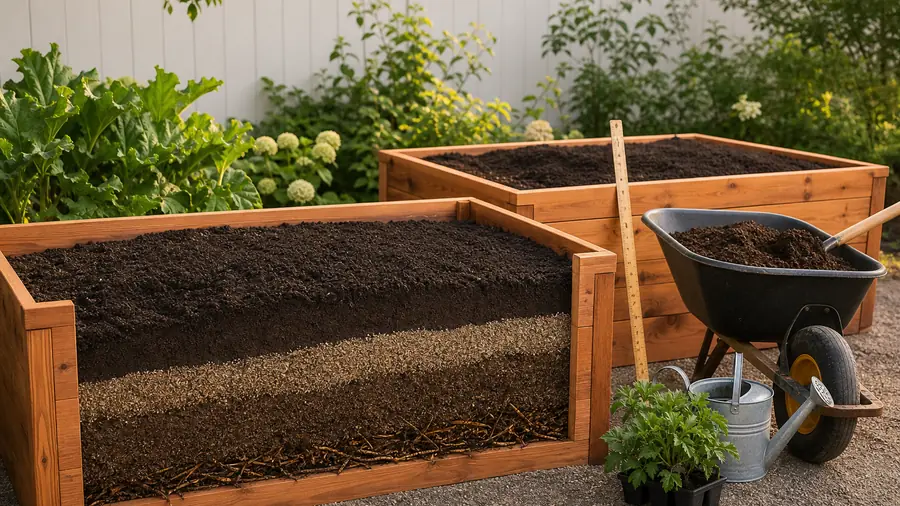

A bulk delivery works when the written material order, the supplier's truck, and one acceptable drop location agree. A cubic-yard total alone cannot confirm that a truck can enter the site or that the pile can stay clear of runoff.
Send the supplier accurate access details, mark the approved property location, and inspect the ticket and material before spreading. Keep local street, sidewalk, stormwater, and property rules in the decision.
What should you check before a bulk delivery?
Confirm the exact material, cubic-yard quantity, complete price, truck requirements, delivery window, and acceptable drop point in writing. Clear the route, keep the pile away from drains and runoff paths, prepare a cover, and retain the ticket and photographs. The driver decides whether the final approach and unloading position are safe.
Verify the project quantityPrintable field sheet
Bulk material delivery checklist
Lock the material and quantity before scheduling a truck
Put the product name, ordered unit, billed quantity, fees, delivery window, and change policy in one written record.
Start with measured project volume. Use the Mulch Calculator for a mulch layer, the Soil Calculator for general fill, the Topsoil Calculator for a topsoil order, or the Compost Calculator for a documented compost application. Record the raw volume and any allowance separately.
Several beds need a ledger before they become an order. The multiple garden-bed delivery guide keeps unlike products separate, totals compatible rows, and reconciles supplier rounding without erasing the measurements.
One cubic yard equals 27 cubic feet. Keep the unit beside every number because a quote for four cubic yards is not interchangeable with four tons or four truck scoops. NIST supplies the exact cubic-foot conversion; the supplier must state how it sells and bills the named material.
Ask for the complete delivered price: material, minimum billed quantity, delivery, tax, fuel or distance charge, and any placement limitation. Do not treat a phone estimate as a final order if the product or quantity remains ambiguous.
The bagged-versus-bulk mulch guide compares those costs before the purchase. This checklist begins after bulk delivery is the selected route.
The supplier must approve access for its own vehicle
Send measurements and photographs instead of promising that a driveway or gate is “big enough.”
Ask what vehicle will arrive and what the supplier needs for width, overhead clearance, turning, backing, slope, ground firmness, and unloading. Vehicle types and requirements vary. A dimension quoted by another company cannot approve this delivery.
Photograph the approach from both directions. Measure the narrowest gate, note low branches and wires, identify roof overhangs, and disclose tight turns or steep grades. Tell the supplier whether the route crosses pavers, a septic area, a culvert, soft ground, or a driveway with an unknown load capacity.
The property owner can name acceptable locations; the driver can refuse an unsafe approach or dump. Keep children, pets, vehicles, bins, trailers, and helpers outside the operating area. Do not stand behind the truck or try to guide its mechanical movements.
Street, sidewalk, alley, and shared-drive placement may require local permission or may be prohibited. A tarp does not create permission. Check the relevant local authority, property owner, and association before placing an order that cannot fit fully on the approved property.
Mark a drop zone that keeps material out of runoff
Choose a firm, reachable property location away from storm drains, gutters, ditches, waterways, and obvious downhill flow.
Boulder County's municipal stormwater procedures keep soil and mulch stockpiles away from drainage where feasible, limit their exposure, and prohibit washing debris into streets, roadside ditches, or drainage ways. Home-delivery rules remain local, but the runoff path still belongs in the site check.
Mark the acceptable zone with cones or visible tape. Leave room for the pile to spread without touching a wall, garage door, gate, or planted area. Loose material forms different pile shapes based on moisture, particle size, loading, and dumping, so do not rely on a universal footprint.
A ground sheet can simplify cleanup or separate mulch from a surface, but it does not guarantee that a heavy load will leave pavement unstained or undamaged. Ask the supplier what surface it accepts and whether it permits a sheet under the unloading area.
Prepare wheelbarrows, shovels, routes, gates, and help before delivery. A pile placed near the street may still require hundreds of repeated trips to the work area. Plan where unused material can remain without blocking access or sending sediment downhill.
Inspect the ticket and material before spreading
Match the supplier, product, ordered unit, billed quantity, and delivery address while the load remains identifiable.
University of Maryland Extension advises bulk topsoil buyers to ask about the soil's origin, testing, mixing, and storage and to examine it before purchase or delivery. University of Idaho Extension lists source, tests, amendments, biosolids, pesticides, screening, and sample availability among questions for a topsoil supplier.
Resolve those material questions before scheduling with the bulk soil supplier question guide. Delivery-day inspection checks whether the arriving material matches that written order. Compare its visible texture, color, odor, and contaminants with the approved sample or description. Do not mix it into an older pile until the check is complete.
Photograph the ticket, the load or pile, the material close up, and the drop location. If the product appears wrong, the ticket differs from the order, or unloading caused damage, contact dispatch before using the material. Record the name of the person who gives the next instruction.
A photograph cannot prove cubic-yard volume from pile shape. Use the supplier's delivery and measurement records for a quantity dispute. Keep the original quote, payment receipt, delivery ticket, and any written correction together.
Cover or move the pile before weather can carry it
Shorten storage time, prevent run-on, anchor any cover, and sweep loose material away from drainage.
The City of Tacoma's stormwater manual says small raw-material stockpiles can be covered with a sturdy impermeable tarp or sheet, weighted in place, with run-on kept away. It also calls for daily inspection of the cover for gaps or holes. Apply local requirements where they are stricter.
Put the cover on safely from the ground. Do not climb a loose pile or work under equipment. Direct clean water around the storage area, not through it, and replace any displaced weight before wind can lift the sheet.
Sweep tracked soil and mulch back into the pile. Do not hose it toward a gutter or drain. Move material to the project promptly, then clean and dry reusable sheets before storage.
Bulk delivery questions
Can a dump truck place material anywhere on my driveway?
No location is automatic. Give the supplier accurate access details and acceptable property options; the driver must approve the final safe approach and unloading point.
Should I put a tarp under bulk soil or mulch?
A suitable sheet can aid separation and cleanup, but ask the supplier whether it permits one under the drop. A tarp does not guarantee protection from weight, staining, or damage.
Can the pile go in the street?
Only when the local authority and other relevant property rules allow it. Street or sidewalk rules vary, and a delivery company cannot replace required permission.
How do I verify the delivered cubic yards?
Match the ticket and written order. A loose pile photograph or guessed dimensions cannot establish exact delivered volume because pile shape and compaction vary.
Sources and checklist boundary
- University of Maryland Extension: Soil to Fill Raised Beds, for bulk topsoil source, testing, storage, and inspection questions.
- University of Idaho Extension: Questions to Ask Before Buying Topsoil, for the pre-order supplier record.
- Oregon State University Extension: How to Use Compost, for bulk cubic-yard purchasing and volume planning.
- City of Tacoma: Anchored Tarp or Plastic Sheet BMP, for cover and run-on controls.
- Boulder County: Municipal Stormwater Procedures, for stockpile and drainage controls.
- NIST Guide to the SI, Appendix B, for cubic-foot and cubic-yard conversion.
Change log: Published July 28, 2026 with an interactive printable checklist, blank order record, access-approval boundary, delivery inspection steps, and stormwater controls.
Last updated 11 November 2026