
Ask a bulk soil supplier what the product is, where its ingredients came from, how it was prepared, what current evidence describes it, and how the complete delivered price is calculated. Record the answers against the same project brief for every supplier.
Names such as “premium topsoil,” “garden blend,” and “three-way mix” are not complete specifications. The useful question is whether the actual stockpile, sample, written description, and intended garden job agree.
What should you ask a bulk soil supplier?
Before ordering, request the exact product name, intended use, source, blend recipe, screening details, current test information, disclosed inputs, representative sample, selling unit, complete delivered quote, and mismatch policy. A confident adjective is not a substitute for those answers. Keep unknowns visible and ask a local soil-testing laboratory or Extension office how to interpret reports for your project.
Calculate the topsoil quantity firstPrintable comparison sheet
Three-supplier evidence matrix
A status records whether you received a usable answer. It does not grade the soil or replace a laboratory interpretation.
| Evidence to record | |||
|---|---|---|---|
| Project and exact productNamed use and supplier product name | |||
| Origin and consistencySource area, stockpile, and whether origins are mixed | |||
| Recipe or ingredientsComponents and stated proportions for a blend | |||
| ScreeningScreened or unscreened, with screen size if stated | |||
| Current evidenceReport date, laboratory, sample date, and represented pile | |||
| Compost inputsFeedstocks, processing, storage, and finished-product checks | |||
| Disclosed treatmentsAmendments, biosolids, manure, or known pesticide history | |||
| Representative sampleSample source and whether it matches the order stockpile | |||
| Selling unitCubic yards, tons, bags, or another clearly defined unit | |||
| Complete delivered quoteMaterial, minimum, delivery, tax, and other stated charges | |||
| Mismatch remedyWritten contact and process if the delivered product differs |
Define the garden job before asking for a product
Give every supplier the same use, area, target depth, existing-soil condition, planting plan, and volume estimate.
A material for filling a low area does not have the same job as a root-zone mix for vegetables. University of Connecticut Extension advises buyers to begin with the problem being solved and notes that material intended for grading can be a poor match for a vegetable bed. Write down whether the project is lawn repair, general fill, a new in-ground bed, a raised bed, or a measured compost amendment.
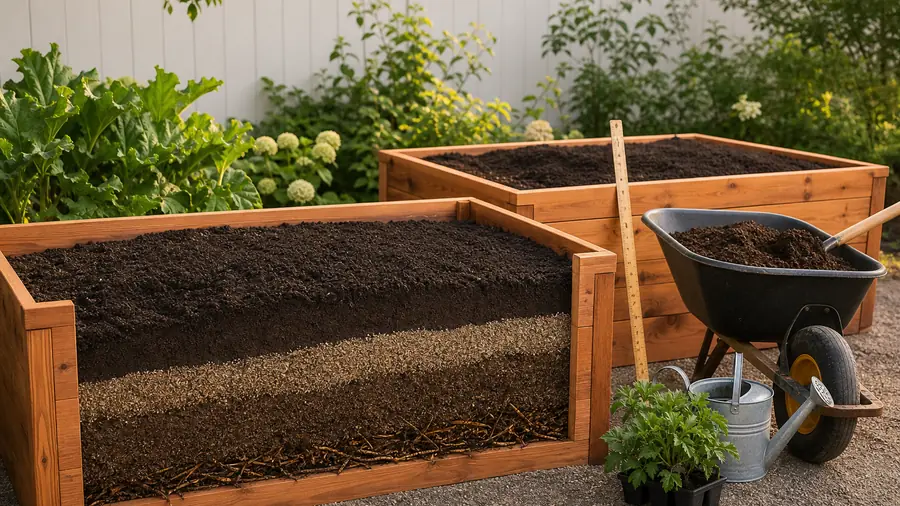
Separate material choice from quantity. The topsoil, garden soil, and compost comparison explains their different jobs. For a raised bed, use the raised-bed soil-mix guide to document components instead of assuming one universal recipe.
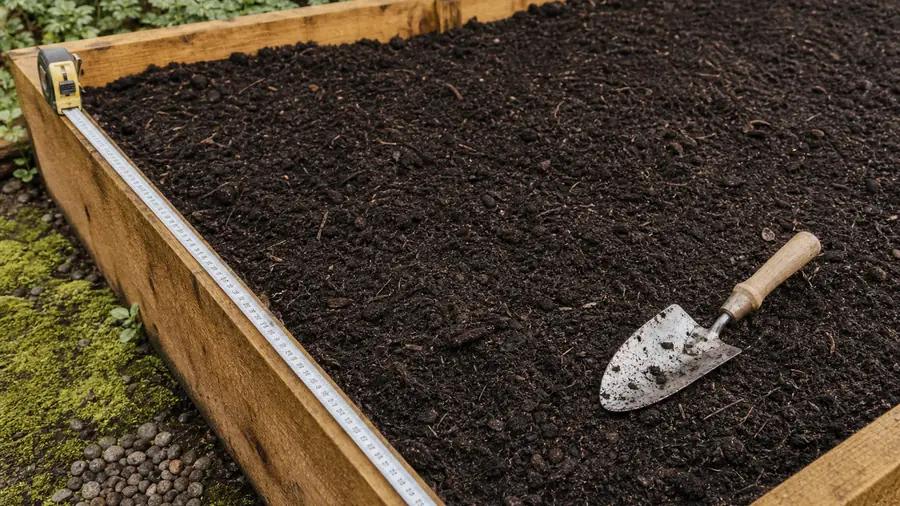
Then measure the project. Use the Soil Calculator for a general bed, the Raised Bed Soil Calculator for multiple framed beds, or the Compost Calculator for an amendment layer. Keep the calculator result labeled as an estimate until the supplier confirms its selling unit.
Get the product identity, origin, and recipe in writing
Ask what is in the named product, where each major component came from, and whether the delivered material will come from the same source or blended stockpile.
University of New Hampshire Extension recommends asking for the source and, for an amended product, its recipe. University of Maryland Extension adds questions about on-site mixing and storage. Those details matter because a sample from one pile cannot describe a later load assembled from different material.
For mineral soil, ask whether it is native soil, imported material, or a constructed blend. Ask whether it is screened and, if so, what screen size the supplier uses. Screening can remove material larger than the screen opening; it does not by itself establish texture, fertility, organic matter, or contaminant status.
For a blend, request components and stated proportions. If compost is included, ask about its feedstocks and production record. Oregon State University Extension lists yard debris, forestry products, crop residues, manures, food scraps, mushroom waste, and vermicompost among possible compost source materials. Different inputs and processes can produce different finished products.
The University of Idaho supplier checklist specifically raises amendments, biosolids, pesticide history, and screening. Ask these as disclosure questions, not accusations. If a use has a special safety or regulatory requirement, identify it before accepting a product recommendation.
Ask what evidence represents the current material
Request the report itself, then record its date, laboratory, sample identifier, measured properties, and the stockpile it represents.
“Tested” is incomplete when the buyer cannot connect a report to the offered product. University of New Hampshire Extension says buyers should ask for product test data and identifies pH and soil texture class as minimum useful soil-analysis information. A local laboratory or Extension professional can explain which additional analyses fit the proposed use.
Do not copy a universal pass/fail number from an unrelated region or plant. Desired pH, soluble-salt tolerance, nutrients, organic matter, and contaminant testing depend on the crop, native soil, product, local guidance, and exposure pathway. A report can inform a decision only when its units, methods, material, and date are understood.
Compost needs its own questions. Oregon State University Extension describes finished-compost indicators including appearance, odor, particle size, carbon-to-nitrogen ratio, pH, metals, and soluble salts. It also warns that manure- and mushroom-based composts may have high soluble salts and that herbicide residues can occur in compost or soil mix. Ask which properties were checked rather than treating one word such as “organic” as a complete analysis. Use the compost quality buying guide to match the analysis, physical sample, and delivered batch.
Storage can change the material after sampling. Ask whether the tested lot has been mixed with newer material, exposed to runoff, or stored where windblown seed and debris can enter. Record the supplier's answer instead of assuming a test date guarantees the present pile.
Use a sample as a screening step, not a laboratory substitute
Obtain a representative sample from the offered stockpile and label its product, location, and collection date.
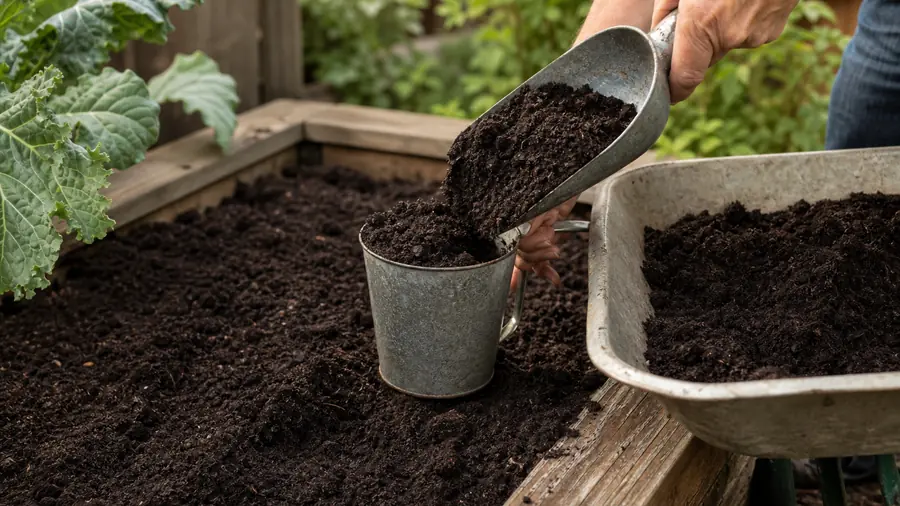
Look for obvious stones, roots, trash, glass, construction debris, weed material, mottling, and inconsistent layers. Smell the damp material. University of Maryland Extension describes suitable topsoil as dark and crumbly with an earthy smell and advises against material that is foul-smelling or extremely sandy, clayey, sticky, chalky, rough, or gray-mottled.
Those observations are useful rejection clues, not a complete quality test. Color alone cannot establish fertility or safety, and a handful cannot establish the consistency of a large pile. University of New Hampshire Extension likewise says visual inspection alone cannot determine topsoil quality.
If residue is a concern, discuss appropriate laboratory testing with a qualified local service. The Idaho checklist mentions a small bean or pea growth assay as one screening option for distorted growth, but a home growth check does not identify a chemical, measure concentration, or prove that every part of a stockpile is free of contamination.
Normalize the selling unit and complete delivered quote
Compare the same named product, quantity basis, and delivered scope; do not compare a cubic-yard price directly with a ton, scoop, or truckload price.
One cubic yard is 27 cubic feet, but cubic yards measure volume and tons measure mass. Converting between them requires a density that represents the actual material and moisture condition. Ask whether the supplier sells by measured volume, scale weight, bag, loader bucket, or another defined unit.
Suppose one written quote is $42 per cubic yard with a four-yard minimum and $70 delivery. Before tax, the minimum delivered amount is $238, or $59.50 per delivered cubic yard. A second quote of $48 per yard with a two-yard minimum and $35 delivery is $131, or $65.50 per delivered yard at that minimum. The lower sticker price creates the higher total only when the first minimum forces an unwanted quantity; compare the quantity your project actually needs.
Record material cost, minimum billed quantity, delivery, distance or fuel charge, tax, split-load charge, sample fee, and quote expiry. Ask how a wet product, substituted blend, or unavailable stockpile affects the order. Keep quantity allowances visible rather than hiding them inside a rounded truckload.
If a suitable bagged product is also available, use the bagged-versus-bulk soil comparison to equalize volume, whole-order rounding, fees, staging, and handling before choosing the format.
Compare unanswered questions without inventing a quality score
Prefer the supplier whose documented product fits the project; use missing answers as follow-up items, not automatic proof of failure.
The matrix above records communication completeness. A “confirmed” status means only that the answer and note were captured. It does not mean the reported value is suitable. Review any technical evidence against your crop, site, and local laboratory guidance.
Pause when the offered product changes names during the quote, a sample cannot be tied to the delivery pile, the selling unit is undefined, or a claimed report cannot be provided. Ask for a correction in writing. If the supplier cannot answer a question, record that plainly and decide whether the uncertainty matters for this project.
Once the material and order are chosen, move to the bulk soil and mulch delivery checklist for truck access, a lawful drop point, arrival inspection, photographs, pile containment, and cleanup. That is a separate delivery-day decision from pre-order material selection.
Bulk soil supplier questions
Is screened topsoil automatically good garden soil?
No. Screening describes removal of material larger than a chosen opening. Ask separately about origin, texture, recipe, organic matter, testing, intended use, and the representative sample.
How recent should a soil test be?
There is no universal age that makes every report valid. Ask when and where the sample was collected, whether the current offered stockpile is the same material, and whether later mixing or storage changed it.
Does an earthy smell prove soil is safe?
No. Odor and appearance can reveal obvious concerns, but they cannot establish chemical composition or rule out contaminants. Use appropriate laboratory testing when the source, past land use, or intended use creates concern.
Should the cheapest price per yard win?
Not by itself. Compare the material that fits the project, the required minimum, complete delivered total, evidence, sample, and remedy if the delivered product does not match the written order.
Sources and decision boundary
- University of Connecticut Extension: What to Know Before You Buy Topsoil, for project fit, source, screening, intended use, blend, and inspection questions.
- University of New Hampshire Extension: Purchasing Top Soil, for supplier, recipe, test-data, texture, screening, odor, and sample guidance.
- University of Idaho Extension: Questions to Ask Before Buying Topsoil, for origin, tests, amendments, biosolids, pesticide history, screening, and sample questions.
- University of Maryland Extension: Soil to Fill Raised Beds, for origin, testing, mixing, storage, and physical inspection.
- Oregon State University Extension: How to Use Compost, for compost feedstocks, finished-product properties, storage, moisture, salts, and herbicide concerns.
- NIST Guide to the SI, Appendix B, for the cubic-foot and cubic-yard conversion.
Change log: Published July 28, 2026 with a three-supplier evidence matrix, source-backed question set, quote-normalization example, and a strict separation between material selection and delivery-day logistics.
Last updated 11 November 2026