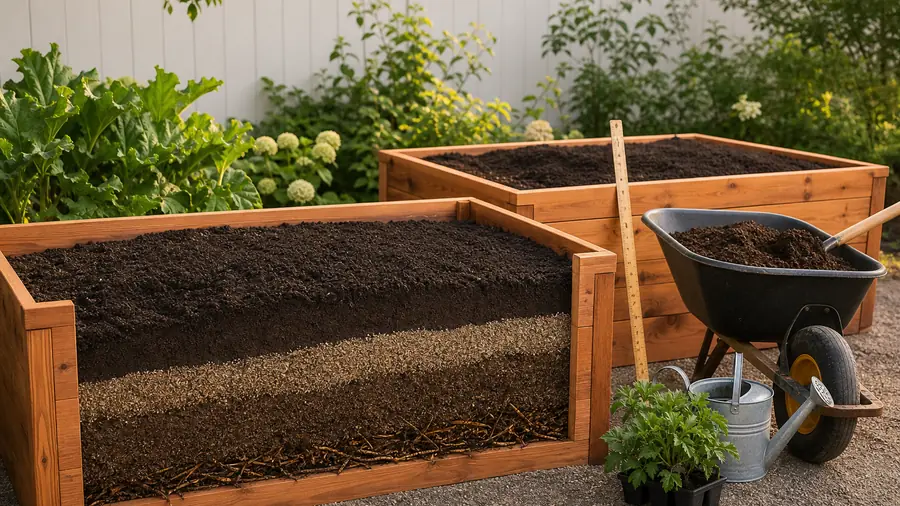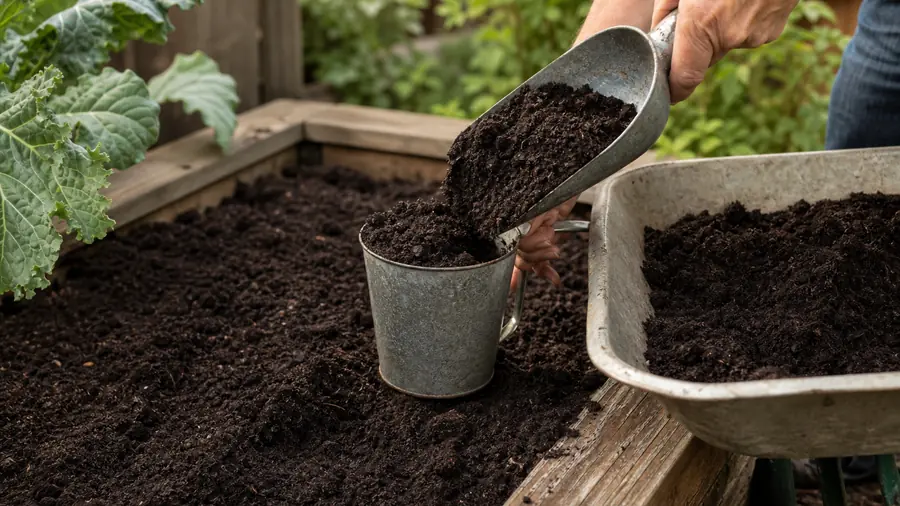

Bagged soil gives you a labeled package, whole-bag ordering, and a load that can be moved in stages. Bulk soil arrives as one loose volume and may lower the material price, but it also brings a supplier minimum, delivery rules, a temporary stockpile, and a larger handling job.
Neither format is automatically the better buy. Confirm that both products suit the same project, convert them to one volume unit, round to what can actually be purchased, and then compare the full route from seller to finished bed.
Should you buy bagged or bulk soil?
Bags often suit a small, staged, or access-limited job; bulk can suit a larger measured project with a suitable drop zone and a competitive complete quote. There is no universal cubic-yard point where the winner changes. Product identity, bag size, order increments, delivery, pickup, taxes, access, storage, and cleanup move the break-even point for every quote.
Calculate the project volume firstCompare two suitable products, not two convenient names
A bag marked “garden soil” and a supplier's “screened topsoil” may have different ingredients, evidence, and intended jobs, so price alone cannot make them substitutes.
The University of Connecticut Home Garden Education Office says “topsoil” does not guarantee quality. It advises asking where the soil came from, whether it was screened, what job it is intended for, and whether compost is already included. Bulk soil is usually cheaper than bagged soil, the 2026 guidance notes, but a cheap load is poor value if it is hard, low in organic matter, or unsuitable for the project.
University of New Hampshire Extension adds that a dark, crumbly appearance is not enough to establish quality. It recommends asking for source, amendment recipe, test data, screening status, and a sample. University of Idaho Extension's buyer checklist also asks about biosolids, pesticide history, amendments, and soil testing.
Apply the same scrutiny to the bag. Read its identity, intended use, ingredients or analysis where provided, and warnings. The topsoil, garden soil, and compost comparison can identify the material category; this article begins only after both candidates pass the project-fit test. When a bulk quote uses a screening label, verify what it means with the screened-versus-unscreened topsoil guide.
Convert both quotes to cubic feet or cubic yards
Use the bag's labeled net volume and the supplier's billed bulk volume; do not convert a bag weight into soil volume.
NIST states that consumer packages carry identity and net-quantity information, and its Handbook 133 includes a dedicated procedure for mulch and soil labeled by volume. Find the printed cubic feet, dry quarts, or liters on the package rather than estimating from the bag's outside dimensions.
One cubic yard contains 27 cubic feet. A 1.5-cubic-foot bag is therefore 1.5 ÷ 27 = 0.0556 cubic yard, before whole-bag rounding. A 0.75-cubic-foot bag is half that volume. The bag-size comparison guide covers dry quarts and liters when competing labels use different units.
Soil weight changes with material and moisture, so pounds are not a safe shortcut for this price comparison. Use volume for the quantity decision. If a supplier gives a density or loaded weight for transport planning, record it as supplier-specific information and follow the cubic-yard soil weight guide before checking the rated limits of the vehicle, trailer, cart, and equipment involved.
Round each option to the quantity actually sold
Compare purchasable orders: whole bags for one option and the supplier's minimum or increment for the other.
A mathematical requirement of 44.1 bags means 45 bags. A bulk requirement of 2.2 cubic yards may become 2.5 yards when the yard sells half-yard increments, or a larger quantity when a delivery minimum applies. Write the raw requirement and purchased quantity on separate lines so neither rounding step disappears.
| Quote line | Bagged option | Bulk option |
|---|---|---|
| Suitable product identity | Exact bag and intended use | Exact supplier product and intended use |
| Raw project volume | Same cubic feet or yards | Same cubic feet or yards |
| Purchased quantity | Whole bag count | Supplier increment or minimum |
| Material subtotal | Bag count × current bag price | Purchased yards × current price per yard |
| Other quoted costs | Tax, pickup or delivery, deposit | Tax, delivery, zone or minimum-load fee |
| Handling plan | Unload and carry each bag | Contain pile and move loose soil |
Do not force the bulk order up to a supplier minimum and then call every extra yard a useful allowance. Excess is still material that needs a legal drop location, cover, movement, and a suitable final use. A smaller bagged order can cost more per cubic foot yet cost less overall when the bulk minimum greatly exceeds the project.
Total every quoted cost without inventing a national price
Use dated local prices for the exact products and write all fees into the comparison before naming a winner.
Bagged costs can include sales tax, store delivery, vehicle rental, fuel, or repeated trips. Bulk costs can include delivery by zone, small-load charges, minimum quantities, tax, or a separate fee for a narrow delivery window. Optional hired labor or equipment belongs on both sides when it is genuinely part of the plan.
Ask the bulk supplier for the complete delivered quote in writing. The bulk-soil supplier question guide records product evidence, selling unit, minimum, delivery, and sample information before the price comparison is finalized.
Retail promotions and supplier rates change by date and location. A published national dollar range cannot replace the two quotes in front of you. Record the date, tax treatment, delivery address, quantity, product name, and expiration of each quote so the result can be reproduced.
Map the handling route before choosing bulk
Confirm where the truck can unload, where the pile can remain, and how each load will travel from that point to the project.
Real delivery rules can be restrictive. As one documented example, the City of College Park, Maryland, requires a stable paved, concrete, gravel, or compacted unloading surface; specifies truck clearance and width; does not cross grass or curbs; and unloads in one location. A private supplier will have its own truck and property rules, which should be confirmed rather than assumed from that example.
Walk the route with a tape. Note gates, steps, soft ground, tight turns, slopes, overhead wires or branches, parked vehicles, and the distance to each bed. Decide whether the soil will move by hand, cart, wheelbarrow, or hired equipment, and keep every load within the applicable rating.
Washington State University Extension advises covering small soil stockpiles with a tarp and preventing sediment from reaching gutters and storm drains. Choose a contained drop zone before the truck arrives, account for rain and runoff, and plan sweeping or cleanup. The bulk delivery field checklist handles the full access and delivery-day inspection.
Bagged soil is useful when control matters more than unit price
Favor bags when the required volume is small, the job will be staged, access is narrow, or loose-soil storage cannot be managed.
Bags can be bought in exact whole units, kept under cover, carried through a gate, and opened only as needed. That can suit a repair scattered across several areas, an upper-level terrace, a small top-up, or a project whose schedule would leave a loose pile exposed for too long.
The tradeoff is repeated handling and packaging. Count how many units must be loaded, transported, unloaded, carried, opened, and disposed of or recycled under local rules. Do not call the bagged route “easy” solely because each unit is smaller; 45 bags are 45 separate handling events.
Bag labels also make batch identity visible, but matching labels do not guarantee the contents are appropriate for every use. Check the label each time, keep a photo or receipt for the purchased batch, and stop if the material has an unexpected odor, debris, or appearance.
Bulk soil is useful when the measured project and site can absorb it
Favor bulk when a suitable product is available, the purchasable amount is close to the need, the complete quote is competitive, and the delivery route is ready.
A single loose load reduces individual package handling and plastic packaging. It can serve multiple beds that genuinely use the same product. Keep different materials or depths as separate calculator areas so one large total does not merge a lawn topdressing product with a garden-fill product.
Bulk does not remove quality checks. Inspect the sample and, where practical, the delivered material against the written product description before spreading it. Photograph the load and ticket, and contact the supplier promptly if the product identity or condition differs from the agreement.
The pile also creates a deadline. Wind and water can move loose soil, traffic can compact it, and a long stay can obstruct normal access. Match delivery timing to the labor, tools, weather cover, and installation schedule instead of accepting the first available truck date.
A checked quote can reverse the per-unit assumption
Calculate the actual orders first; then compare their totals using current local numbers.
Consider an illustrative project whose measured volume, after the user's chosen allowance, is 2.475 cubic yards. That equals 66.825 cubic feet. If a bulk supplier sells in half-yard increments, the order rounds to 2.5 cubic yards. If the competing bag contains 1.5 cubic feet, 66.825 ÷ 1.5 = 44.55, so the order rounds to 45 bags.
Suppose the dated local bag quote is $5.49 per bag plus $19.95 delivery. The total is 45 × $5.49 + $19.95 = $267.00. Suppose the suitable bulk quote is $48 per cubic yard plus $75 delivery. The total is 2.5 × $48 + $75 = $195.00.
Illustrative difference: $267.00 − $195.00 = $72.00
These prices are arithmetic inputs, not claimed market averages. Replace them with the actual bag label, retail quote, bulk product, increment, fees, and tax. Then use the Topsoil Calculator for a topsoil project or the Soil Calculator for a general soil-volume project.
A $72 quote difference does not automatically select bulk. If the truck cannot unload safely, the product is not equivalent, or the pile cannot be contained and moved, the comparison fails an earlier gate. Conversely, do not add an imaginary labor charge to bulk but value bag handling at zero. Record only real costs and constraints.
Bagged and bulk soil questions
How many soil bags equal one cubic yard?
Divide 27 cubic feet by the bag's labeled cubic-foot volume. A 1.5-cubic-foot bag is one eighteenth of a cubic yard, so exactly 18 equal 1 cubic yard before any project allowance.
Is bulk soil always cheaper?
No. Bulk material often has a lower unit price, but product fit, delivery, minimums, purchasable increments, access, storage, and cleanup determine the whole-order result.
Can I compare bag pounds with bulk cubic yards?
Not without supplier-specific density information for the exact material and moisture condition. Use labeled volume for the purchase comparison and separately verify transport weights and equipment ratings.
Can several projects share one bulk delivery?
Yes, when they genuinely use the same product and each area has been measured at its own depth. Keep the area records separate and total them only after confirming material compatibility.
Sources and comparison boundary
- University of Connecticut Home Garden Education Office: What to Know Before You Buy Topsoil, for product fit, source, screening, intended use, contamination questions, and the bounded bulk-cost observation.
- University of New Hampshire Extension: Purchasing Top Soil, for source, recipe, test data, screening, sample, and inspection limits.
- University of Idaho Extension: Questions to Ask Before Buying Topsoil, for supplier evidence questions.
- NIST: Packaging and Labeling Requirements FAQs and NIST soil-by-volume training materials, for package identity, net quantity, and labeled-volume testing.
- NIST Guide to the SI, Appendix B, for volume conversion factors.
- Washington State University Extension: Urban Soil Management, for covered stockpiles and sediment-control practices.
- City of College Park: Bulk Material Delivery Requirements, as one documented example of truck access and unloading constraints.
Change log: Published July 28, 2026 with a four-gate buying diagram, whole-order worksheet, route audit, and checked 2.475-yard example.
Last updated 11 November 2026