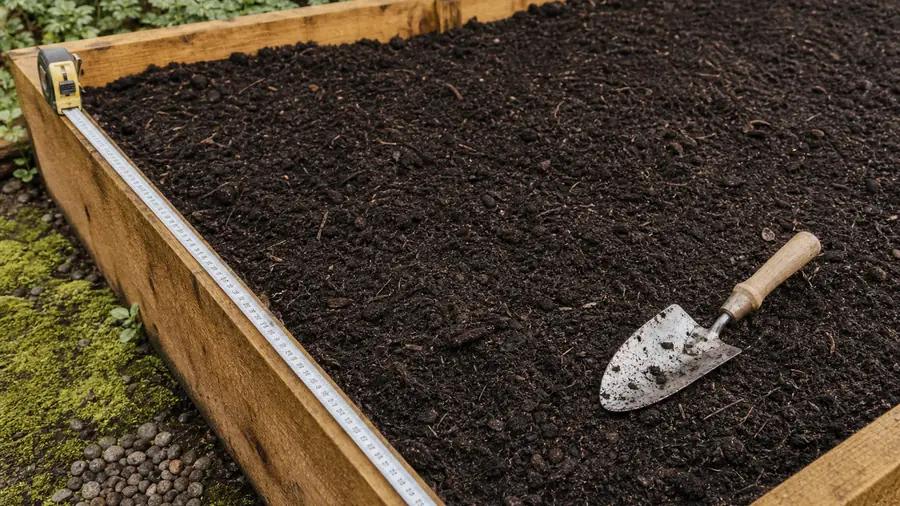

A 12-inch frame can give plants more than 12 inches of usable soil when it sits open-bottomed over loosened garden soil. The same frame on concrete gives roots only the soil inside it. A 30-inch accessible planter may hold a shallower soil chamber above a supported internal floor.
These examples need different fill volumes. Choose depth from the crop, surface below, soil condition, drainage outlet, and access needs. Calculate bags and cost after making those decisions.
How deep should a raised garden bed be?
Extension guidance commonly starts with a 6-to-12-inch usable root zone for many vegetables, but the surface below decides whether that zone can continue beneath the frame. On hard surfaces, Maryland Extension gives at least 8 inches for leafy greens, beans, and cucumbers and 12 to 24 inches for peppers, tomatoes, and squash.
Calculate fill for your selected depthSeparate frame height from usable soil depth
Record frame height, filled soil depth, missing fill depth, and the full root zone. Only the missing soil chamber belongs in a new material order.
| Measurement | Meaning | Use |
|---|---|---|
| Frame height | Ground or support to the top edge | Construction and access |
| Filled soil depth | Soil-chamber bottom to planned soil level | Root space inside the frame |
| Missing fill depth | Current safe fill to planned soil level | New soil volume |
| Usable root zone | All suitable soil roots can enter inside and below | Crop suitability |
Measure inside the frame. Board thickness, corner posts, a false bottom, and an unfilled lip reduce the space that holds soil. A tall planter needs a floor and supports designed for wet soil weight; exterior height does not require a full box of soil.
The base below the bed changes the answer
Bottomless beds over prepared ground can share a root zone with soil below. Pavement, solid floors, compacted subsoil, and a contamination barrier limit or block that connection.
Utah State Extension says beds shallower than 12 inches should stay bottomless so roots can reach prepared soil below. It advises loosening that soil before adding new garden soil. Missouri Extension also says soil at or below grade can supply part of a 6-to-12-inch rooting zone after deep tillage.
Inspect existing soil before counting it. Dense construction fill, standing water, buried debris, or contamination can make apparent depth unusable. The raised-bed soil mix guide explains how the base affects the material choice.
Hard-surface beds must hold the whole root zone
A bed over concrete needs enough internal soil for the crop plus a clear outlet for excess water. Roots cannot borrow depth or moisture from soil below.
University of Maryland Extension gives at least 8 inches for leafy greens, beans, and cucumbers on hard surfaces. It gives 12 to 24 inches for peppers, tomatoes, and squash. The source warns that these beds dry faster because roots depend on moisture held inside the frame and may face reflected heat.
Keep those numbers with the hard-surface scenario. Crop variety, heat, wind, irrigation, and the growing mix still affect the plan. Confirm that pavement drains away from the bed and can carry the saturated weight. A deeper box cannot repair a blocked outlet.
Extension sources cover several bed types
Published depths differ because the sources cover mounded beds, framed boxes, hard surfaces, and accessible designs.
| Source | Depth guidance | Scenario |
|---|---|---|
| Oregon State | About 8 inches can root most vegetables | Open-ground mounded bed |
| Utah State | Frame 6 to 12 inches high for most vegetables | Shallow frame over prepared soil |
| Missouri | Most plants need a 6-to-12-inch root zone | Prepared soil below grade can count |
| Maryland | 8 inches or 12 to 24 inches by crop group | Bed on a hard surface |
| Oregon State compost guide | 28 to 34 inches tall | Wheelchair access height |
Write your choice as a complete note: crop, surface, soil below, internal soil depth, and source. That record identifies the measurement to enter in the calculator.
Accessible height and soil depth serve different jobs
Choose working height for reach and comfort, then engineer a soil chamber that gives the crops their required root zone.
Oregon State's compost guide places wheelchair-accessible beds at 28 to 34 inches tall. These access dimensions do not instruct gardeners to buy 28 to 34 inches of soil. A raised internal floor can reduce fill, but it must support wet soil, plants, irrigation, and people leaning on the frame.
Provide drainage without sending water onto a slippery path. Structural design, local building rules, and the gardener's reach belong in the plan before material is ordered.
Depth changes water management and structural load
A deeper soil chamber adds stored soil moisture and wet weight. Check irrigation, drainage, wall support, and the surface below as one system.
Maryland Extension warns that raised beds on hard surfaces dry faster because roots cannot reach moisture below the frame. Pavement can also absorb and reflect heat. More depth may give the mix a larger moisture reserve, but gardeners still need to inspect moisture inside the root zone and adjust watering for weather, plants, and the growing medium.
Wet soil pushes against long walls and adds load to a patio, roof, stand, or internal floor. Missouri Extension says beds higher than 18 to 24 inches need retaining walls with foundations and supports. Brace long sides where the design requires it, and ask a qualified professional to check a roof, balcony, elevated stand, or uncertain pavement before loading it.
Drainage needs an exit at the lowest part of the soil chamber. Keep outlets open, direct discharge away from structures and walking routes, and avoid creating a sealed basin inside a tall decorative shell. These checks can change the safe depth even when two beds will grow the same crop.
Deeper soil increases volume across the whole bed
Every extra inch applies across the full footprint. Compare cubic feet before buying a taller frame.
A 4-foot by 8-foot bed needs, before allowance:
- 21.33 cubic feet at 8 inches of fill.
- 32 cubic feet at 12 inches of fill.
- 48 cubic feet at 18 inches of fill.
Moving from 12 to 18 inches adds 16 cubic feet, a 50 percent increase for the same footprint. Enter the chosen missing depth in the Raised Bed Soil Calculator to calculate several beds, component volumes, bags, and cost. Do not enter full frame height when existing soil or a raised floor occupies part of the structure.
Set the frame and any internal floor before taking the final depth measurement. On sloping ground, one exterior wall may stand taller while the planned soil surface remains level. Measure from the actual chamber bottom to that finish line at each corner and near the center. A consistent result can use one depth. If the chamber varies, divide it into measured sections or record a defensible average with the high and low readings. Do not hide a large slope inside one guessed depth.
Check the site before ordering materials
Finalize the root zone, structure, and water path before ordering boards or soil.
- List the crops and varieties planned for the bed.
- Identify soil, compacted ground, pavement, or a supported floor below.
- Inspect native soil before counting it as usable depth.
- Mark the drainage route and irrigation access.
- Choose a working height and reach for the gardener.
- Confirm supports for tall walls or a raised internal floor.
- Measure the empty soil chamber inside the finished frame.
Select the material after depth. The soil material comparison separates mineral fill from compost and seller-defined blends.
Raised-bed depth questions
Is 6 inches deep enough for a raised bed?
Some open-ground beds can provide more usable depth through suitable, loosened soil below the frame. Six inches over concrete does not meet Maryland's hard-surface guidance for many crops.
Is 12 inches deep enough for tomatoes?
Maryland includes 12 to 24 inches for tomatoes on a hard surface. A bottomless bed over prepared soil may provide more root depth below a 12-inch frame.
Does a 30-inch-tall bed need 30 inches of soil?
No. A supported internal floor can create a shallower soil chamber at an accessible working height. Size the chamber for the crop and provide drainage.
Should I put rocks in the bottom for drainage?
A rock layer does not replace a drainage outlet. Confirm that water can leave the bed and use a suitable growing mix.
Which depth belongs in the calculator?
Enter the missing soil depth from the current safe fill surface or supported floor to the planned soil level.
Sources and decision boundary
- University of Maryland Extension: Growing Vegetables in Raised Beds, for hard-surface crop depths and water considerations.
- Utah State University Extension: Raised Bed Gardening, for frame depth and open-bottom guidance.
- Oregon State University Extension: Raised Bed Gardening, for the open-ground mounded-bed method.
- University of Missouri Extension: Raised-Bed Gardening, for the root-zone and structural boundary.
- Oregon State University Extension: How to Use Compost, for wheelchair-accessible frame height.
Change log: Published July 28, 2026 with a three-case cross-section, source comparison, fill-volume comparison, and pre-build checklist.
Last updated 11 November 2026